This guide explains how Spin Automatica is used and evaluated in an industrial context, focusing on selection criteria, integration, supplier due diligence, and operational conditions. Objectively, the term commonly connects automation-driven motion/control systems. The article then provides an expert checklist, a comparison table of decision factors, and practical FAQs to help organizations assess fit, reliability, and total cost considerations.
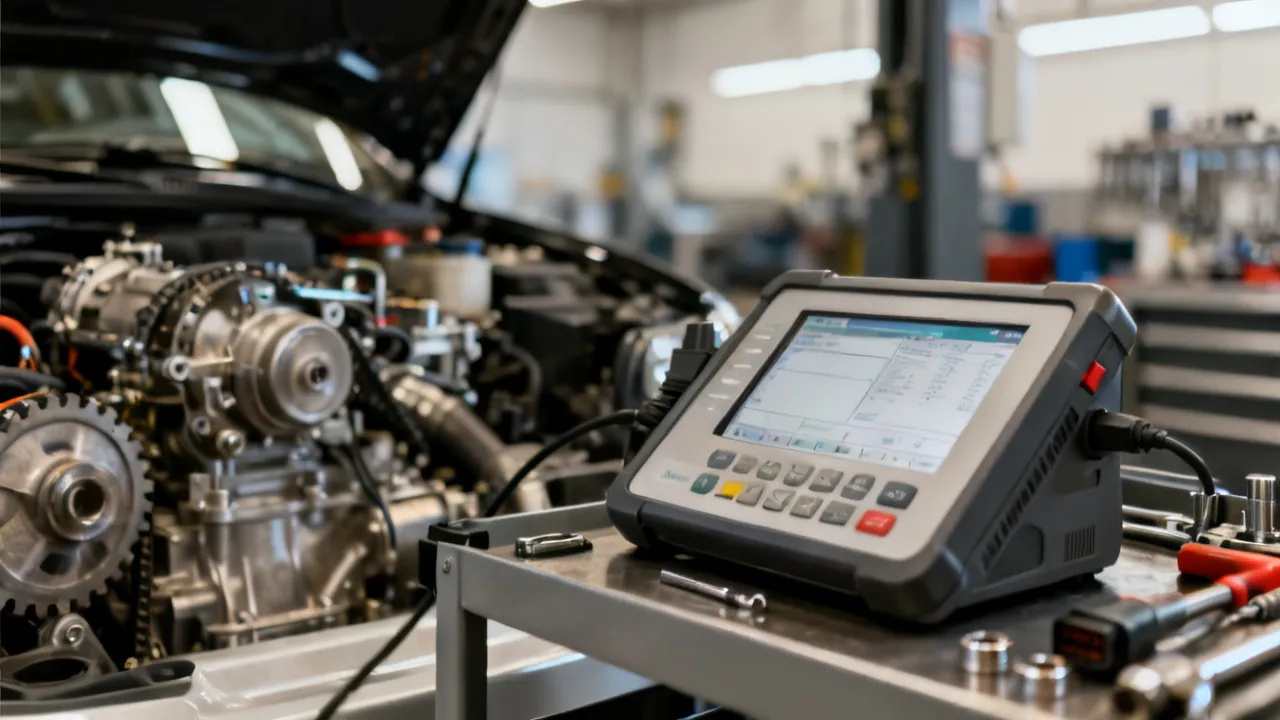
Spin Automatica is typically discussed as an automation-oriented approach to controlled motion—where a system performs repeatable rotations (“spin”) under measurable settings (“automatica”). For organizations evaluating such equipment or workflows, the very important step is to define what must be controlled (speed, torque, position, timing), where it will run (production line, lab cell, packaging station), and how it must integrate (sensors, PLC/SCADA, safety circuits, data logging). Without those answers, even a strong supplier offering can lead to mismatches in performance, safety compliance, and maintenance needs.
From an industry expert perspective, the discussion usually moves quickly from “what it can do” to “what it will do reliably over time.” That reliability depends on mechanical design margins, control strategy stability, documentation quality (wiring diagrams, BOM traceability, version control for firmware/software), and the supplier’s ability to support commissioning, validation, and service. In procurement terms, you are not only buying equipment—you are buying predictable outcomes under real operating constraints.
One reason buyers sometimes get stuck is that “Spin Automatica” can be used as a generic label, a module name, or a marketing shorthand. Regardless of naming conventions, procurement should insist on a crisp technical definition: What actuators are used? What controller handles the motion? What feedback sensors close the loop? What safety-rated components are included? What signals are exchanged with the line? What data are recorded? What is the fallback behavior on faults? When you clarify these points early, you reduce the likelihood of “integration surprises” later.
Before you even request a quote, it also helps to outline the practical constraints your team will live with: available electrical cabinet space, network architecture, plant standards for grounding and cabling, acceptable downtime windows, and the level of in-house engineering support (controls engineering, mechanical integration, validation personnel). A supplier can propose the best motion solution in the world, but if it can’t realistically be installed and validated in your environment, total cost of ownership will rise quickly.
In automation deployments, the value of a controlled spin mechanism is rarely about a single cycle. It’s about repeatability across shifts, predictable acceleration/deceleration profiles, and stable behavior under varying loads—such as different product weights, material tolerances, or temperature changes.
An objective way to frame the concept is this: a “Spin Automatica” workflow usually implies a system that (1) receives commands or recipes, (2) executes controlled rotational motion using a motor/actuator and feedback sensors, and (3) reports status signals used by the rest of the line. When companies describe these solutions, they often emphasize control loops and instrumentation accuracy because those elements strongly influence product quality and downtime risk.
Even when the term appears in different ways across markets (for example, as a brand name, a module name, or a generic description), the evaluation logic remains similar: measure what matters, verify it, then lock down integration and safety requirements.
To understand why repeatability is so central, consider how rotational motion affects upstream and downstream steps. If the rotation is used for winding, mixing, dosing, or applying uniform mechanical action, small variations can translate into inconsistent product behavior. If the rotation is used for positioning—such as aligning a component to a station—repeatability also affects cycle time because retries and manual corrections can become frequent if the system misses its target.
From a control standpoint, repeatability is not only about the sensor reading accuracy at one moment. It’s also about the dynamic response of the closed-loop system: how quickly the system reaches the commanded speed or position, how it behaves during load changes, and whether it overshoots or oscillates. Buyers should therefore ask for evidence not only of “achieved position” but also of trajectory quality across acceleration/deceleration phases.
Another common issue is that a supplier may optimize tuning for the nominal load but not for the full operating range. When your facility runs a variety of products, humidity levels, material densities, or upstream feeding rates, the load on the motor can change. Without robust control tuning and sufficient mechanical design margins, performance can degrade. That degradation might appear as longer settling times, more frequent faults, or subtle product quality drift that is harder to diagnose.
Because you did not provide specific numeric price, supplier names, or a location, this guide avoids stating unverifiable figures. In practice, “Spin Automatica” pricing can vary widely based on configuration—such as motor type, control hardware, sensor suite, safety interlocks, enclosure rating, and software features (recipe management, data export, audit trails).
To keep procurement grounded, consider the full cost of ownership instead of focusing solely on purchase price. In many automation projects, the very expensive “surprises” are not the machine itself but the integration work: custom wiring, safety validation, mechanical rework, calibration time, training, spares strategy, and the effort needed to reach stable cycle performance.
Industry reference approach: For cost and maintenance planning, many manufacturers align with recognized reliability practices and standards (for example, IEC-aligned safety processes and general reliability engineering methods). If your organization already uses documented maintenance frameworks (TPM, ISO-aligned asset management practices), you can map the spin system’s service intervals and diagnostic outputs into that framework.
When thinking about total cost of ownership, buyers often want a structured way to compare solutions from different suppliers. A useful method is to create a “life-cycle cost” worksheet with categories such as:
Even when you can’t estimate exact dollars, you can compare suppliers by asking for the same evidence. For example, do they provide a commissioning plan that indicates what measurements will be taken and how long they expect tuning and verification to require? Do they include spares recommendations and typical lead times for critical components? Do they provide a clear software update policy and version control approach?
Lead time is another practical procurement variable. Spin systems may require specialized components like encoders, servo drives, specialized couplings, or custom mechanical parts. Buyers should therefore ask for a realistic manufacturing and delivery schedule that includes buffer time for long-lead components. If you can’t plan production around delivery, you can end up paying for expedited shipping or reconfiguring your outage schedule.
Buyers should also consider whether the system is truly “plug-and-play” for their facility, or whether it requires custom mechanical interfaces and extensive controls logic. A seemingly similar unit can have drastically different integration effort depending on how the supplier packages its I/O, how they document signal timing, and how they support safety handshakes and fault propagation.
Any controlled rotational motion system must be assessed against safety requirements for the environment where it operates. In real facilities, risk is not abstract—it can be traced to mechanical pinch/crush hazards, unexpected motion due to control faults, and electrical risks in industrial cabinets.
From an expert standpoint, integration typically includes:
Even if your facility is experienced with automation, you should request an explicit safety and commissioning plan from the supplier—because the “how” of Spin Automatica deployment is as important as its “what.” A common procurement pitfall is treating safety as a checkbox rather than as an engineered function with verification steps. Safety functions must be tested and documented; the supplier and integrator should agree on what tests will be performed and how the results will be recorded.
Buyers should clarify several safety-related topics early:
Another practical safety aspect is that the motion system can introduce hazards even when not actively running. Rotating inertia may cause coasting after a stop command. Buyers should ask for stop category behavior and, if relevant, the expected stopping times and safe distances for guarded areas. Even if your facility already has safety risk assessments, the motion system’s specific behavior should be reflected in them.
Supplier evaluation is where procurement transforms from “marketing claims” to engineering reality. You should ask for evidence and specifics—especially around performance verification, calibration support, and service responsiveness.
Below is a due-diligence checklist tailored to controlled spin automation systems. It is written to help procurement teams ask the right questions without requiring them to be motion-control experts.
1) Scope clarity
2) Motion performance evidence
3) Feedback and calibration
4) Integration interfaces
5) Recipe and parameter management
6) Safety function delivery
7) Documentation and change management
8) Service, spares, and escalation
9) Commissioning deliverables
When buyers ask for evidence with clear constraints, the supplier’s answers reveal whether they have an engineering discipline behind the motion system or whether they rely on assumptions. A supplier who can’t provide documentation, test conditions, or integration specifics may still deliver a unit, but the probability of rework and delays rises substantially.
To make this process truly effective, buyers should assign ownership internally: a controls lead, a mechanical integrator, a safety/validation representative, and a procurement owner. When responsibilities are unclear, even a good supplier can be blocked by delays in approvals or late decisions about acceptance criteria. The step-by-step approach above works best when each step has an owner and an output deliverable.
| Decision Factor | What “Good” Looks Like | How to Verify It |
|---|---|---|
| Motion control quality | Stable rotational behavior across load ranges, predictable acceleration/deceleration | Review test results for repeatability under representative loads |
| Sensor and feedback strategy | Appropriate feedback (encoder, position/velocity sensing) with validated calibration procedures | Ask for sensor specs, calibration workflow, and diagnostic readouts |
| Integration compatibility | Clear I/O/communication mapping with documented timing and handshake behavior | Request interface control documents and integration sample logic |
| Safety architecture | Safety-rated design aligned with recognized industrial safety practices | Request safety function list, commissioning test plan, and evidence of compliance workflow |
| Documentation and traceability | Complete electrical/mechanical documentation and version-controlled software artifacts | Audit manuals, BOM traceability approach, and change management process |
| Maintenance and spares | Defined preventive maintenance intervals and realistic spares access | Confirm spares catalog coverage and average lead time assumptions |
| Commissioning and training | Structured training and hands-on commissioning support | Ask for commissioning deliverables and training agenda |
In addition to the table, buyers can improve decision-making by using a scoring method that is transparent internally. For example, assign weighted scores for safety documentation quality, evidence of repeatability across load range, integration clarity (including timing), and service responsiveness. This prevents the team from being influenced disproportionately by the lowest initial price.
Spin Automatica systems can be sensitive to real-world operating conditions. Procurement and engineering teams should set expectations early and document them as part of the project requirements.
Projects often stall when requirements are communicated as assumptions rather than explicit requirements. For example, a buyer may assume that the supplier will handle cable routing best practices, but the supplier may assume the buyer provides plant-standard cabling and conduit routing. Similarly, a buyer may assume that “fault signals” are sufficient for troubleshooting, but in practice maintenance might require more detailed diagnostic data.
Another frequent stall point is communication and timing mismatch. Even if the supplier supports a standard protocol, the way the supplier maps commands and statuses can differ. Buyers should request examples of how the machine responds to typical sequences: start request, execute command, completion feedback, and fault states. Without those sequence examples, controls teams can misinterpret handshake requirements, causing the system to behave inconsistently.
Mechanical stall can also happen when buyers underestimate the importance of installation quality. Rotational automation often depends on precise coupling alignment, correct fastening torque, and stable mechanical foundations. Suppliers can provide guidance, but installation quality ultimately depends on the buyer’s facilities and maintenance procedures. Buyers should therefore ask for installation checklists and recommended commissioning routines.
Procurement teams often encounter performance claims presented without enough context. An objective approach is to require conditions of measurement. For example, repeatability should be tested under the load, temperature range, and part variability relevant to your production. Similarly, reliability expectations should be tied to documented maintenance practices and fault log analysis.
For baseline reliability engineering methods, many organizations refer to recognized frameworks such as ISO-aligned quality management and general reliability/maintenance engineering practices. If you need a formal reference for your organization’s internal documentation standards, you can align the acceptance criteria to ISO 9001-style quality processes and broader maintenance planning conventions (without relying on speculative vendor promises).
To keep performance evaluations objective, buyers should push for a test plan that includes:
It is also helpful to evaluate whether performance metrics align with your process needs. For example, a supplier might show great position accuracy but ignore cycle timing constraints. Another supplier might show adequate cycle timing but allow larger overshoot that affects product outcome. Buyers should therefore map vendor metrics to their actual product quality and throughput requirements.
Reliability claims also require careful handling. Instead of accepting generic statements like “highly reliable,” buyers should ask for:
If a supplier provides a reliability statement, request the assumptions. For instance, reliability numbers can vary widely based on expected duty cycles, ambient temperature, maintenance quality, and installation standards. A reliability statement without assumptions is difficult to use for procurement risk management.
“Spin Automatica” is commonly used to describe an automation-oriented controlled spin/motion solution where rotational behavior is executed under programmed settings and feedback. In practice, the exact definition can vary by supplier or module name, so you should confirm the system’s components, control logic, and measurable performance targets during quotation.
Because the term can be ambiguous, buyers should treat it as a placeholder until the supplier provides a detailed technical description. That description should include the actuator type, controller architecture (including motion control loop), feedback sensor details, the safety strategy, and the system’s data interface. Only after that clarification can the buyer meaningfully compare proposals.
Compare suppliers on configuration scope and verification evidence: sensor suite, safety architecture deliverables, integration interfaces, documentation completeness, commissioning support, and service/spares plan. When you evaluate total cost of ownership, include integration labor, downtime risk, training effort, and maintenance alignment—not just the initial purchase price.
A useful way to compare suppliers is to require each proposal to be structured around the same deliverables. For example, require a standard “interfaces package,” a standard “safety deliverables package,” and a standard “commissioning and acceptance plan.” If one supplier delivers less documentation and evidence, they may appear cheaper up front but cost more later.
Also compare “hidden scope” assumptions. Some suppliers may not include cable lengths, installation brackets, or certain sensor types. Others may assume your integrator will implement safety logic differently than your internal standards. By requiring explicit scope boundaries and assumptions in writing, procurement reduces the risk of conflict after purchase order placement.
Request interface control documentation (I/O map and communication details), electrical and mechanical drawings, safety function lists and commissioning test procedures, maintenance manuals, and version-controlled software/firmware information. If the supplier cannot provide clear documentation and acceptance test criteria, you should treat that as a procurement risk.
Beyond the typical documents, buyers should consider requesting a “traceability and revision history packet” for key components. That packet can include revision status for firmware, safety logic versions, drive configuration parameters, and any calibration constants. If your facility needs audit readiness or regulated documentation, version traceability becomes especially important.
Buyers should also request a sample of the system’s diagnostic data outputs: alarm codes, fault logs, and recommended troubleshooting steps. A strong documentation set includes not only drawings, but also practical troubleshooting guides that reduce downtime during unexpected events.
In very industrial deployments, integration is feasible, but the key is to confirm communication method compatibility (e.g., standard industrial protocols), signal timing requirements, and how faults are surfaced to the rest of the line. Ask for a sample I/O mapping and handshake logic so your controls team can plan the integration work accurately.
Integration compatibility is not solely about protocol selection. Buyers should also verify:
If the supplier’s system has an internal “recipe execution” mode, buyers should also clarify how recipe selection happens through the PLC and how recipe completion is acknowledged. Misunderstandings here are a common cause of inconsistent behavior in commissioning and can lead to production schedule delays.
Very useful acceptance tests are those that mirror your real operating conditions: motion repeatability under representative loads, stable behavior across required cycle speeds, safe stop behavior during simulated fault conditions, and confirmation that logged data meets your traceability and monitoring needs.
To make acceptance tests more useful operationally, buyers should include:
Acceptance testing should not be limited to “the system moves.” It should verify that the system moves correctly, safely, and with operationally relevant performance and diagnostics.
Ask the supplier for preventive maintenance intervals, expected component wear items (such as bearings or couplings where applicable), diagnostic indicators, calibration frequency, and the recommended procedure for parameter/recipe management. Also confirm spare parts availability and typical lead-time assumptions so you can build a realistic maintenance schedule.
Maintenance planning should include both proactive and reactive elements. Proactive maintenance includes routine inspections, lubrication schedules (if relevant), encoder checks, and calibration tasks. Reactive maintenance includes how quickly technicians can diagnose problems, whether spare parts are stocked, and whether software parameters can be restored quickly after replacement.
Buyers should also clarify whether any maintenance actions require specialized tools or vendor support. For example, encoder replacement might require calibration procedures, and drive parameter restoration might require access to configuration backups. If the supplier provides configuration backup/export features, that can reduce downtime significantly.
Frequent delays include late clarification of safety requirements, incomplete integration interfaces, mechanical mounting mismatch, unclear acceptance criteria, and insufficient commissioning support. Reducing ambiguity early—through a structured evaluation process and agreed test conditions—typically prevents these issues.
Additional delay causes that buyers should anticipate include:
Procurement can reduce delays by ensuring that the contract includes clear deliverables, acceptance criteria, and responsibilities for documentation updates. When these are not contractually defined, disputes can arise during commissioning and extension of timelines can be contested.
Instead of relying on raw vendor promises, focus on measurable evidence: test duration, documented fault behavior, diagnostic coverage, maintenance recommendations, and how the supplier supports troubleshooting. If a reliability statement is provided, request the underlying assumptions and testing conditions.
Reliability is also affected by how the system is operated. For instance, excessive starts/stops, operation outside recommended temperature ranges, or failure to perform routine maintenance can reduce system lifetime. Buyers should therefore confirm recommended operating envelopes and maintenance requirements in clear terms.
In addition, buyers should evaluate how faults are detected and whether the system transitions to safe states in a predictable manner. A system that “fails silently” or provides ambiguous alarms can be difficult to maintain even if the hardware is technically reliable. Reliability includes both hardware endurance and operational diagnosability.
The very effective way to approach Spin Automatica is to treat it as an engineered system that must satisfy your motion/control needs, safety expectations, and integration realities. Define requirements with clarity, demand verification evidence, and compare suppliers on scope, documentation, commissioning, and service capability. When you do that, you transform procurement from a “spec sheet comparison” into a practical, measurable plan—one that supports stable production outcomes and reduces the risk of rework after installation.
To make the process even more actionable, buyers can convert the checklist and acceptance test concepts into contract language. Specify deliverables such as interface control documentation, safety function descriptions, acceptance test procedures, training agenda, diagnostic data formats, and spares recommendations. Then define objective acceptance criteria tied to measurement conditions. This turns procurement from a negotiation into engineering execution.
Ultimately, “Spin Automatica” procurement success comes from aligning three things at the same time: (1) the physical mechanics that create controlled rotation, (2) the control and feedback strategy that produces repeatable outcomes, and (3) the safety, integration, and data workflows that make the system manageable inside a real industrial environment. When those are aligned up front through careful clarification and due diligence, buyers reduce risk while increasing confidence that performance will remain stable across production shifts and product variability.
Spin Automatica: Expert Guide to Safe Optimization
Spin Automatica: Industry Guide for Buyers and Operators

Spin Automatica: Expert Overview and Buyer Considerations
How Spin Automatica Optimizes Industrial Filling Processes

Spin Automatica Guide for Informed Decisions
Spin Automatica: An Expert Guide to Smart Automation

Understanding Spin Automatica for Smarter Slot Choices
Spin Automatica: Expert Guide to Use and Sourcing
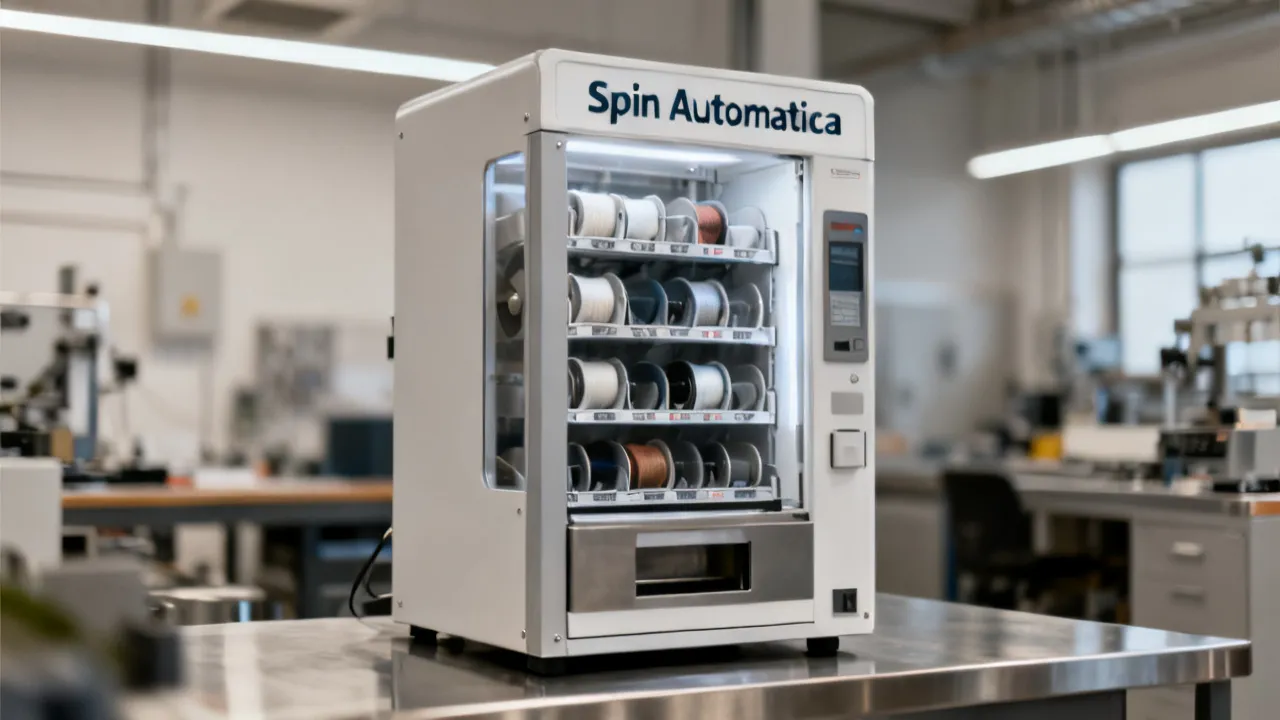
Understanding Spin Automatica: Use, Care, and Pricing

Spin Automatica: Expert Overview and Buyer Considerations
This guide explains how Spin Automatica is used and evaluated in an industrial context, focusing on selection criteria, integration, supplier due diligence, and operational conditions. Objectively, the term commonly connects automation-driven motion/control systems. The article then provides an expert checklist, a comparison table of decision factors, and practical FAQs to help organizations assess fit, reliability, and total cost considerations.
